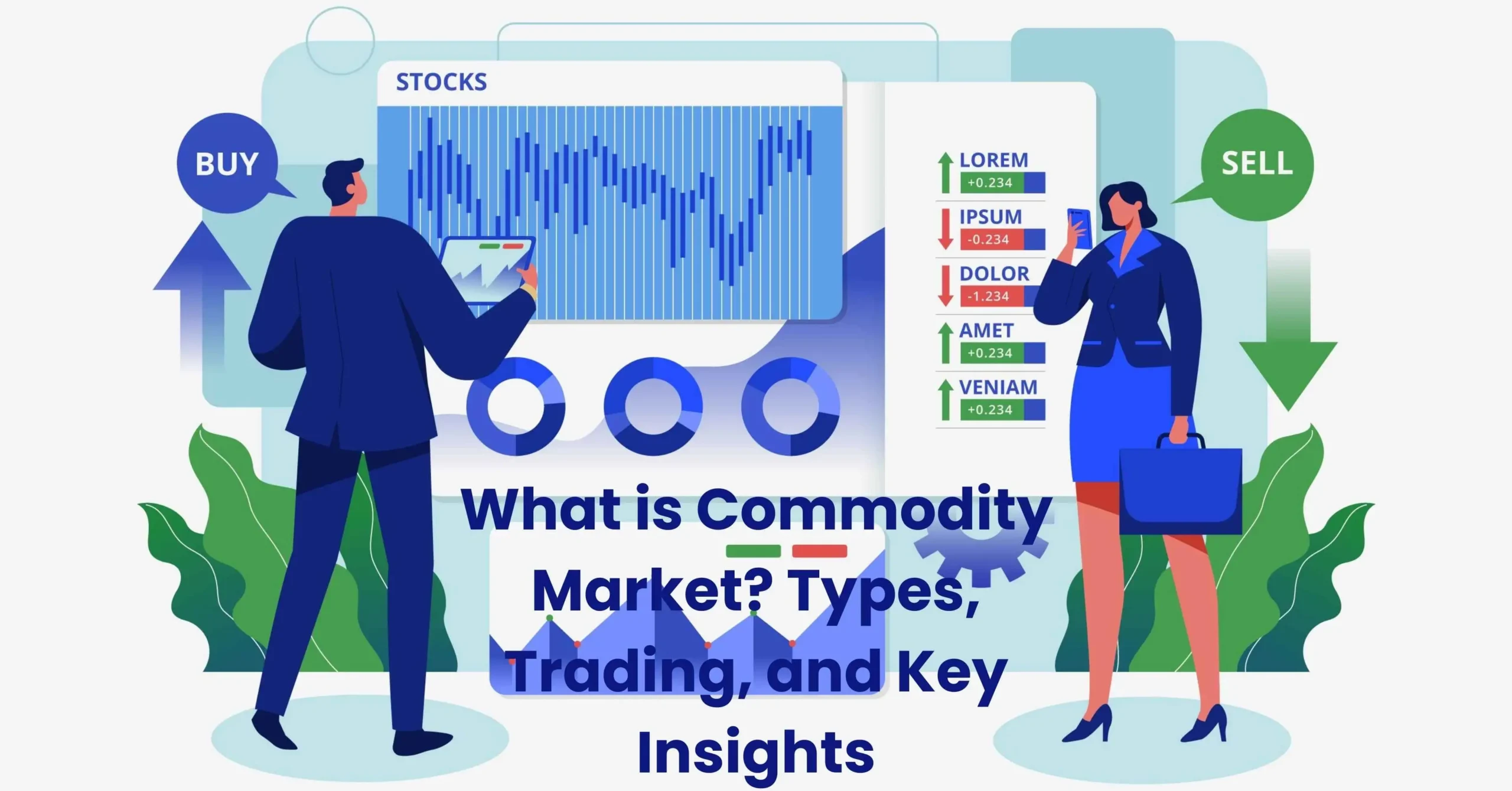
The commodity market is the arena where raw materials and primary products are exposed to purchase, sale as well as trade. Such a market is of key importance to the world economy as it provides a venue for manufacturers, consumers, and investors to undertake price risk, speculate on price changes and secure supply for the future. Dealing in commodities covers the use of both hard commodities (metals and energy sources) and soft commodities (farm products). Engaging in commodity market enables traders to broaden their investment, protect themselves from inflation and may be able to make a considerable profit. On the other hand, commodity trading is associated with very high risks that call for a trader to be knowledgeable, have a strategy and possess self-control.
Types of Commodities
a. Hard Commodities
Hard commodities are basically natural resources that have been taken out of the earth either by mining or other forms of exploitation. Among these are the precious metals – gold, silver, platinum, and palladium, which are very often utilized for hedging as well as for safe-haven investments. Oil in its crude form, natural gas, and coal are all examples of hard commodities whose prices vary a lot depending on the global demand and the happenings in the geopolitical arena. These are the industrial metals like copper, aluminum, nickel, and zinc that are extremely important for the manufacturing industry and for the growth of infrastructure. The trading of hard commodities is mostly done through the use of futures and options contracts on the exchanges like MCX and NCDEX.
b. Soft Commodities
Soft commodities refer mainly to the agricultural products and the livestock that make up the most vital elements of the global trade system. The list of typical examples is extended by coffee, cocoa, sugar, cotton, wheat, soybeans, rice, cattle, and pigs. These price are extremely volatile and may differ very drastically even within a short period of time.
They depend on changes of seasons, weather, and government policies such as giving subsidies or ban on exports. This instability is a source of profit for traders; however, it simultaneously, considerably increases the risk of losing money. So as to be in a position of making the right and most profitable decisions when trading in soft commodities, it is necessary to know thoroughly the market trends, supply-demand dynamics, and the external factors.
How Commodity Markets Work?
Commodity markets feature different modes of trading that include organized exchanges, over-the-counter deals, and electronic Top trading platforms. These modes provide a structured environment where real commodities or financial derivatives based on commodity prices can be purchased and sold. Trading comprises mainly two types. Physical trade refers to the direct purchase and selling of goods, which enables manufacturers and customers to secure supplies or manage inventory levels.
Derivative trading means using instruments like futures and options contracts. These contracts give the users the chance either to save themselves from the changing price if they are not sure what to do or to take a position if they are expecting the market to move in a certain way. Commodity markets, through their operations, have different types of customers such as farmers, manufacturers, investors, and financial institutions who benefit from their services.
How to Trade in Commodity Market?
a. Major Exchanges
India boasts a large number of commodity exchanges that help in running a transparent, regulated, and efficient market. The Multi Commodity Exchange (MCX) is the country’s leading platform, which generally offers a wide range of metal, energy, and agricultural commodity contracts. The National Commodity & Derivatives Exchange (NCDEX) is an exclusive one for agricultural products that provide the agri-market trading chart with great depth. The Indian Commodity Exchange (ICEX) is a wholesaler in segments like diamond and energy contracts, whereas the National Multi Commodity Exchange (NMCE) is a metal, energy, and agriculture-based diversified portfolio provider. These exchanges together empower the country’s commodity market landscape.
b. Futures Contracts
Futures contractions refer to the agreement that is binding by law where the buying or selling of a certain amount of a commodity at a predetermined price is done on a day that is not specified. The parties in the market can use futures to protect themselves from price changes or just to guess the market movement. Such contracts are uniform and traded on trading venues, thus are very liquid and simple for anyone to reach.
c. Options Contracts
An options contract grants the buyer the privilege of purchasing or selling a commodity at a set price within a certain period of time but is not obliged to do so. By this means, traders can keep their risks under control while the possible losses are limited to a small amount. Options can be used to hedge, speculate strategically, and diversify commodity trading tactics.
Relationship of the Commodity Market and Stock/Bond Market
Price changes of stocks and bonds are impacted by various factors; however, commodity markets remain, in most cases, a supplement to Indian stock and bond markets. For instance, commodities are affected by supply and demand, the weather, geopolitical risks, and global trade, while stocks are largely influenced by corporate earnings and economic conditions. As commodities usually move in the opposite direction to stocks and bonds, having them in a portfolio gives the diversification benefit and lowers the risk of market volatility. Moreover, commodities may serve as an inflation hedge as increased prices can indicate that inflation is rising. To manage risk and increase the overall stability of their portfolio, investors frequently decide to take on commodities along with stocks and bonds.
Traders in a Commodity Market
1. Hedgers
Producers, consumers, or companies that use commodities trading to hedge against price swings are known as hedgers.Basically, these folks want to limit the risk to their exposure instead of increasing profit. A case in point, the industrial enterprises will do it to their raw material expenses in order to keep their production costs at a steady level, oil companies will buy crude oil at a fixed price in advance and farmers will sell their crops through futures contracts so as to be sure of the price even before harvesting. By controlling unpredictability and being financially stable during these operations, hedgers are able to guarantee the continuance of their companies in the face of volatile commodity prices.
2. Speculators
Traders that aim to benefit from changes in commodity prices are known as speculators. They take on more risk than hedgers but offer liquidity and are crucial to price discovery. Hedge funds frequently utilize options to leverage their positions, commodities trading companies may take positions in metals or crude oil, and individual investors may trade gold futures. Although they increase market efficiency, speculators must carefully manage risk in order to prevent large losses due to the high volatility they encounter.
How Are Prices Determined in Commodities Exchange?
Many factors affect commodity pricing, including:
a. Market Demand and Supply
Commodity prices are basically governed by the laws of supply and demand. When demand goes up or supply goes down, prices increase, and when there is too much supply or demand goes down, prices decrease.
b. Global Scenario
Commodities prices are also very vulnerable to changes caused by global events such as international trade policies, geopolitical conflicts, and the general world economy. Take for instance the case of crude oil prices; they depend on global production, geopolitical threats, and OPEC policies.
c. External Factors
While on the same point, soft commodities’ prices, which are a type of commodities, are influenced by weather, natural disasters, and government actions. The prices of the agricultural products, i.e., those made of wheat or soybeans, could rise as a result of poor harvests.
d. Speculative Demand
Speculators can be the reason for short-term price changes, thus, the market becomes more volatile. As a result of speculation, the market gains more liquidity; however, this practice sometimes hides the real market fundamentals.
e. Market Outlook
Commodity trading is a source of potential that is subject to the influence of market conditions, global demand, inflation, and technological advances. The prices of soft commodities depend on weather and seasons, energy commodities vary with geopolitics, and metals like gold become attractive to investors during times of uncertainty.
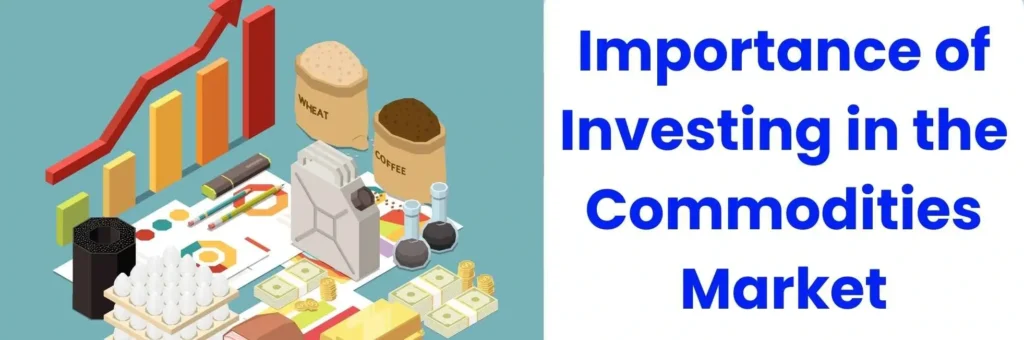
Importance of Investing in the Commodities Market
Commodity investing offers traders and long-term investors a number of advantages:
1. Diversification
Commodities are useful for portfolio diversification because they frequently fluctuate independently of stocks or bonds. Investment risk is decreased overall by diversification.
2. Inflation Hedge
In general, commodity prices increase in tandem with inflation, safeguarding investors’ purchasing power. In this sense, agricultural products and precious metals are very useful.
3. Margin Trading
Margin trading, in which traders can invest a portion of the entire value, is frequently permitted in commodity trading. This raises risk but also offers leverage and the possibility of larger returns.
4. Substantial Returns
In volatile commodities, strategic trading can result in significant profits. Price changes in metals, energy, and agricultural products might be advantageous to knowledgeable traders who assess market conditions.
Limitations of Trading in the Commodity Market
While commodity trading offers opportunities, it also has limitations:
a. High Risk
Commodity prices are extremely erratic and impacted by erratic variables such as weather, speculation, and world events. Traders need to be ready for quick losses.
b. Limited Returns
Margin trading can increase earnings, but it can also result in large losses. When compared to stocks in a stable market, conservative investors could get lower returns.
c. Complexity
Commodity markets necessitate an understanding of technical analysis, price systems, and international markets. There may be severe learning curves for beginners.
FAQs
1. What is commodity trading?
Commodity trading involves the buying and selling of raw materials or basic products such as metals, energy, and agricultural products, either by direct means or through the use of financial instruments like futures and options.
2. What are hard and soft commodities?
Hard commodities are those that can be categorized as natural resources like gold, silver, oil, and industrial metals, which come from mining or extraction. Whereas, agricultural products such as livestock, cotton, and wheat, as well as products like coffee are soft commodities.
3. How do options and futures work in commodities trading?
Futures contract is an agreement to buy or sell a product at a predetermined price at a certain date in the future. Meanwhile, an option is a right, but not an obligation that the holder has to buy (call) or sell (put) a product at a certain price within a specified period.
4. What are the main commodity exchanges in India?
MCX (Multi commodities Exchange), NCDEX (National Commodity & Derivatives Exchange), ICEX (Indian Commodity Exchange), and NMCE (National Multi Commodity Exchange) are the major commodities exchanges in India.
5. Why should investors add commodities to their portfolios?
Commodities may yield excellent profits if managed prudently, help to diversify the portfolio risk, serve as an inflation hedge, and offer the possibility of trading on margin.
Conclusion
Producers and consumers in the commodities market might also be investors and traders who want to expand their portfolios, protect themselves against inflation, and get access to a mix of hard commodities like metals and energy and soft commodities such as agricultural products. Participants can plan ahead and control their risks with the help of futures and options available from exchanges like MCX, NCDEX, ICEX, and NMCE.
At the same time, commodity trading is a game in which the unexpected is always around the corner, and hence, a trader should have excellent command over his judgment, good knowledge of the market, and be emotionally strong. Traders who keep themselves updated with international trends, monitor market behaviour, and adopt conservative strategies are in a position to deal with volatility successfully and take advantage of long-term openings.